
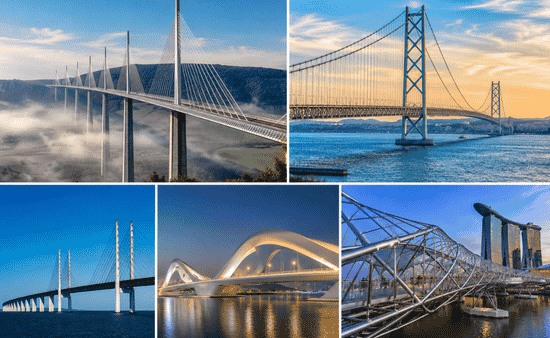
Bridges have always served a fundamental purpose: connecting two distinct points divided by deep valleys, wide rivers, or treacherous bodies of water. However, in the modern era, these structures have evolved far beyond basic utility.
Today, they represent the absolute peak of human ingenuity, seamlessly blending cutting-edge engineering with breathtaking architectural artistry. Modern bridges push the boundaries of physics and material science, reshaping urban skylines and transforming regional economies while standing as monumental works of public art.
Iconic Marvels of Global Infrastructure
1. Millau Viaduct, France
Soaring gracefully over the Tarn River Valley in southern France, the Millau Viaduct is an absolute masterpiece of cable-stayed design. With its highest pier reaching a staggering 343 meters, it holds the record as one of the tallest bridges in the world—even surpassing the total height of the iconic Eiffel Tower.
Completed in 2004, its slender towers and minimalistic deck give travelers the distinct impression of a structure floating effortlessly above the clouds. Beyond its structural elegance, the viaduct significantly optimized transportation between Paris and the Mediterranean coast, reducing travel times and proving that massive infrastructure can harmonize beautifully with natural landscapes.
For families planning memorable vacations, France is often considered one of the best countries to visit with kids, offering a mix of world-famous landmarks, scenic road trips, interactive museums, and outdoor adventures. Crossing the Millau Viaduct can become a unique highlight of a family journey, combining breathtaking views with an appreciation for remarkable engineering.
2. Akashi Kaikyō Bridge, Japan
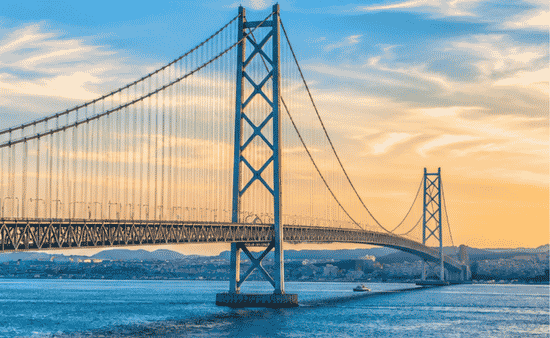
An engineering triumph over extreme environmental conditions, the Akashi Kaikyō Bridge—also known as the Pearl Bridge—boasts the longest central span of any suspension bridge in the world, stretching nearly 2 kilometers. Opened in 1998, this vital transport link connects Kobe with Awaji Island.
What makes it truly extraordinary is its sheer resilience; engineers meticulously designed the structure to withstand violent typhoons and severe seismic activity, showcasing Japan’s mastery in constructing durable, disaster-resistant infrastructure that protects millions of commuters daily.
3. Øresund Bridge, Denmark to Sweden
The Øresund Bridge is a brilliant demonstration of engineering creativity when facing complex logistical and environmental constraints. Spanning 16 kilometers, this incredible infrastructure marvel functions as a hybrid bridge-tunnel system connecting Copenhagen and Malmö.
It transitions seamlessly from an elevated cable-stayed bridge into an underwater tunnel beneath the Øresund Strait. Opened in 2000, it stands as a powerful symbol of Scandinavian cooperation, maintaining crucial maritime shipping lanes while minimizing ecological disruption to local marine life.
4. Sheikh Zayed Bridge, UAE
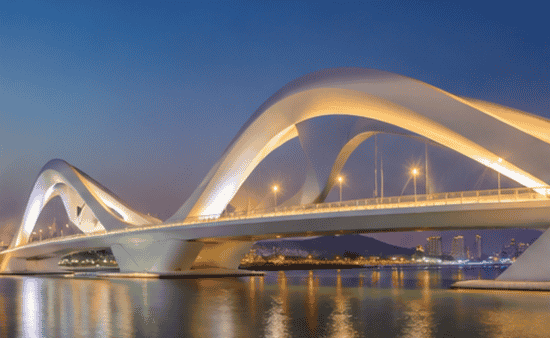
Designed by the legendary architect Zaha Hadid and completed in 2010, the Sheikh Zayed Bridge in Abu Dhabi is a striking example of futuristic aesthetics meeting practical structural integrity.
The bridge features sinuous, sweeping arches that mimic the natural flow of desert sand dunes. At night, a dynamic, integrated LED lighting system illuminates the structure, transforming this functional highway crossing into a glowing public sculpture that celebrates the region’s cultural landscape.
5. The Helix Bridge, Singapore
Located in the heart of Marina Bay, The Helix Bridge is a pedestrian crossing that redefines urban infrastructure. Inspired by the geometric double-helix structure of human DNA, the bridge offers pedestrians a highly dynamic, immersive experience. Its intricate tubular steel design provides immense structural strength while maintaining a lightweight, visually striking aesthetic, seamlessly integrating into Singapore’s hyper-modern skyline.
The Structural Backbone: Advanced Materials
The successful execution of these daring, gravity-defying designs depends heavily on recent advancements in metallurgy, computational modeling, and materials science. Modern infrastructure relies on high-performance concrete, advanced carbon fibers, and precise steel fabrication.
Whether constructing massive international suspension spans or local infrastructure projects, securing top-tier structural components is vital. For example, accessing a reliable supply of steel in Salt Lake City helps regional engineers bring ambitious domestic designs to life safely and efficiently. High-quality materials ensure long-term resilience against wind resistance, heavy traffic loads, and seismic activities, paving the way for the next generation of civil engineering.
Conclusion
From the soaring pylons of France to the intricate double-helix of Singapore, modern bridges are much more than mere transit routes. They embody human ambition, creativity, and progress. By merging advanced technology with visionary design, modern civil engineers continue to turn the impossible into reality, building beautiful connections that will inspire generations to come.