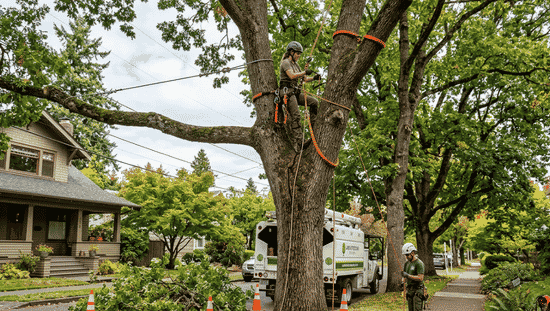
Trees in cities help make areas look nice, lower the heat, and help with stormwater. But their roots do not have much space. City stress often causes big tree problems. City trees do not have the cover that forest trees have, so they feel more wind, crowded soil, and uneven sunlight.
With time, heavy branches, internal wood rot, or weak branch joints can make big limbs more likely to break in a storm. If you spot early signs that a limb is not stable, you can act before anything breaks and hurts property or people. Getting good urban tree care Portland managers trust helps keep old trees safe and removes danger to people.
Critical Indicators That Your Tree Requires Structural Support
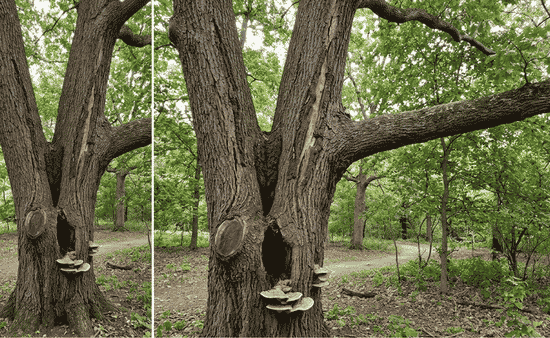
Structural failure does not often happen without some signs showing up first. You should look at the top parts of trees during each season. It is also good to inspect them after strong winds or ice storms. By doing this, you can find which trees may need support.
1. Co-Dominant Stems with Included Bark
A co-dominant stem structure results when a tree has several main stems growing from one point and having roughly equal diameters.
- V-Shaped Crotches: This type of union is not provided with the wood collar normally found in other types of unions due to its tightness.
- Included Bark: As the two stems get bigger, bark gets stuck between them inside the spot where they join. This bark that grows in between keeps the wood from joining to the other wood. It works like a wedge and can push the trunks apart when the wind is strong.
2. Vertical Cracks and Longitudinal Splits
Deep cracks going into the wood under the bark show that the main fibers have already started to split.
- Active Cracks: You can see cracks along big branches or where the main parts of the tree join. This shows the tree is moving when there is weight on it.
- Seams and Callus Ridges: Raised lines or thick bark on a stem mean the tree is trying to fix internal breaks. This often happens because of past bad weather.
3. Heavy, Overextended Horizontal Limbs
Limbs that stretch out far beyond the main tree top feel a lot of “end-weight”. When there is heavy rain or ice, these branches work like long levers. They push a lot of force on the spot where they join the trunk.
4. Internal Cavities and Fungal Decay
Decay organisms break down lignin and cellulose. These are the main things that make wood strong. Large hollows or open spaces, and fungal fruiting bodies (also called conks), near big branch forks can make the tree weaker. This means the tree can’t hold as much weight, so the load has to be spread in a different way.
Cabling vs. Bracing: Choosing the Right System
Supplemental support systems help spread out the weight on a tree. They do not take away large branches that look good or are important to the tree’s shape. A certified arborist will pick either cables that can move some or stiff braces. This choice depends on where the problem is and how bad it is.
These careful approaches also complement Sustainable Gardening Practices for Beginners by helping preserve mature trees and reduce unnecessary removal.
| Feature / Metric | Supplemental Cabling | Rigid Rod Bracing |
| Primary Purpose | Limits branch sway and redistributes wind loads | Secures splits and holds cracked crotches tightly together |
| Installation Point | Upper canopy (two-thirds the distance above defect) | Directly through or immediately adjacent to the union/defect |
| Material Types | Extra High Strength (EHS) steel or synthetic dynamic rope | Heavy-duty threaded steel rods locked with nuts and washers |
| Flexibility | Allows natural, controlled movement to build wind-wood | Rigid connection preventing independent stem movement |
Advanced Standards in Arboricultural Hardware
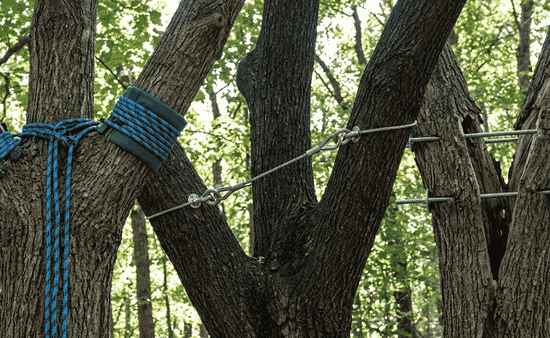
Modern tree support systems follow ANSI A300 (Part 3) rules to keep trees healthy and safe:
- Synthetic Cabling with Polyamide and Polypropylene Ropes: These rope systems go around limbs using sleeves that can get bigger as needed. They do not drill into the wood. This setup lets the limb move a bit when there are small winds. It helps the wood grow strong, and it lowers hard swings when there is a big storm.
- Steel EHS Systems: These are put in by using strong eye bolts that go right through healthy wood. These systems do not move. They hold large tree limbs in place. These are good for big branches that might fall over something important.
- Threaded Rod Reinforcement: Strong steel rods go all the way through the split part of the tree. They squeeze the hurt part together, so the tree can grow over the damage.
Preserving Canopy Safety for the Long Term
Taking care of dangerous tree branches in the city means looking for problems before something bad happens. It is important to find things like weak spots where two big pieces meet, deep cracks, or heavy limbs that stick out too far.
If you spot these early, you can save big, old trees instead of cutting them down. Working with certified experts in urban tree care Portland helps a lot. They make sure all cables and braces follow safety rules, which keeps your property safe and lets your trees keep growing strong.