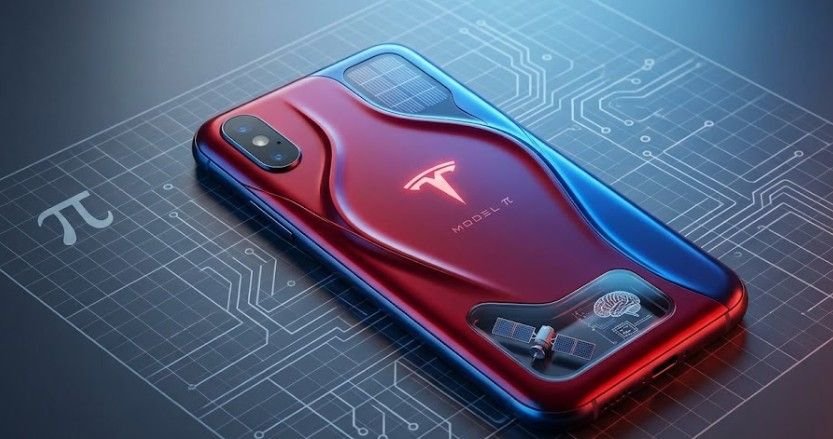
The internet loves a good Elon Musk product rumor, but none has captured the public imagination quite like the Tesla Pi Phone. Search social media, and you will find render after render of a slick, metallic smartphone. Viral posts claim this device can charge off ambient sunlight, mine cryptocurrency in your pocket, and link directly to SpaceX satellites without a cell tower in sight. Some clickbait videos even suggest it syncs directly to human brains via Neuralink.
The problem? Tesla has never announced, engineered, or produced a smartphone.
The so-called “Tesla Model Pi” or “Tesla Pi Phone” is a fan-made concept myth built on internet speculation, realistic-looking 3D renders, and clickbait algorithms. Elon Musk himself has repeatedly debunked the rumor, stating directly on X (formerly Twitter) and in multiple interviews: “We are not developing a phone”.
Understanding why this rumor persists requires looking into how tech hyperbole works—and why the underlying science makes most of these rumored features impossible today.
Anatomy of a Tech Myth: Where Did the Tesla Pi Phone Come From?
The buzz around a potential Tesla handset did not start in a corporate boardroom. It began on YouTube and TikTok around 2021 when digital designers created speculative “concept renders” showing what a Tesla-designed phone might look like.
Content creators quickly realized that pairing Elon Musk’s brand with sci-fi feature lists guaranteed millions of views. Over time, these fan concepts were repackaged by speculative tech blogs as upcoming product launches.
Musk has addressed the idea several times. While he noted that Tesla could theoretically build an alternative phone if Apple and Google ever began censoring or gatekeeping Tesla apps on iOS and Android, he clarified that there is zero active effort to do so.
As Musk noted during a podcast appearance, existing mobile platforms already do everything Tesla needs them to do.
Fact vs. Fiction: Debunking the Rumored Features
The reason the Tesla Pi Phone myth caught fire is that every rumored feature ties back to a real project under Musk’s umbrella. However, pushing these technologies into a handheld phone violates basic laws of physics and engineering.
| Speculated Feature | The Internet Rumor | Practical Engineering Reality |
| Starlink Internet | Direct high-speed satellite internet anywhere on Earth. | Requires satellite dish arrays or Direct-to-Cell protocols with strict bandwidth limits. |
| Solar Charging | Solar back-panel that recharges the battery in sunlight. | Small phone surface area yields under 0.5W—far too weak to power modern devices. |
| Crypto Mining | Native mining of Dogecoin or MarsCoin in your pocket. | Mobile processors lack the thermal budget and compute power; destroys battery life. |
| Neuralink Sync | Mind-controlled interface operating straight from your brain. | Neuralink is an experimental medical BCI requiring surgical implantation. |
1. Direct Starlink Connectivity
Rumors claim the phone connects directly to SpaceX’s Starlink network without cellular carriers. Standard Starlink service requires a phased-array dish antenna with a clear view of the sky and substantial power.
While SpaceX is expanding Direct-to-Cell technology, it uses existing LTE standards to connect unmodified, standard smartphones for emergency text messaging—not ultra-fast 4K video streaming. You do not need a specialized “Tesla Phone” to use it; standard iPhones and Android devices will benefit through telecom partnerships.
2. Built-in Solar Charging
Proponents suggest a solar panel backplate could recharge the device on sunny days. The average smartphone surface area is roughly 15 to 20 square inches.
According to data from the National Renewable Energy Laboratory (NREL), peak solar irradiance on Earth’s surface yields roughly 1,000 watts per square meter. Even with high-efficiency commercial solar cells (~22%), a panel the size of a phone would output less than 0.5 watts under direct sunlight.
Since modern smartphones draw 5 to 15 watts while charging, leaving a phone in hot sunlight for an entire afternoon would yield only a few percentage points of battery—while cooking the lithium-ion cell and accelerating battery degradation.
3. Native Crypto Mining
Claims that the device could mine cryptocurrency stem from Musk’s public affinity for Dogecoin. Mining modern proof-of-work cryptocurrencies requires immense computational infrastructure and heavy power usage.
Attempting to mine on a mobile system-on-chip (SoC) would drain a full battery in under 20 minutes, overheat the phone instantly, and generate mere fractions of a cent per month.
4. Neuralink Mind Control
Neuralink is developing implantable brain-computer interfaces designed primarily to assist individuals with severe mobility challenges, as detailed in research monitored by the U.S. Food and Drug Administration (FDA). It is a medical-grade surgical device, not a consumer accessory meant to pair over Bluetooth so you can scroll social media hands-free.
Why Tesla Doesn’t Need to Build a Phone
Entering the smartphone market is one of the most expensive and low-margin moves a vehicle manufacturer could make. Apple and Google dominate the global smartphone ecosystem through iOS and Android.
Building a proprietary operating system requires establishing an app ecosystem from scratch—a hurdle that famously sank tech giants like Microsoft (Windows Phone) and BlackBerry.
Tesla already achieves hardware integration through software. The official Tesla app on iOS and Android acts as a digital key, climate controller, and security monitor.
Instead of manufacturing mobile hardware, Tesla is embedding Starlink hardware directly into its autonomous vehicle fleets—such as the Cybercab—to support navigation, fleet management, and passenger entertainment.
The “Spot the Fake” Tech Myth Checklist
When a revolutionary tech product appears on social media without an official corporate press release, evaluate it against this checklist to spot fan-made hoaxes:
- No Official Press Room Listing: Check [tesla.com/blog](https://tesla.com/blog) or official X accounts. If it only exists on YouTube channels with dramatic robotic voiceovers, it isn’t real.
- Defies Thermodynamics: Claims of “infinite solar power” or “zero-battery power loss” violate physical laws.
- Vague Hardware Specs: Videos mention “6G networks” or “quantum chips” without detailing real suppliers (e.g., Qualcomm, TSMC, Samsung Foundry).
- Missing Regulatory Approvals: Wireless devices sold in the US must undergo testing and public filing with the Federal Communications Commission (FCC). No “Pi Phone” filings exist.
- Pre-order Payment Scams: Any website asking for crypto or credit card deposits to “reserve” a Tesla Pi Phone is a fraudulent scam.
Frequently Asked Questions
1. Is the Tesla Pi Phone officially real?
No. The Tesla Pi Phone is a fictional concept created by online fans and speculative content creators. Tesla and Elon Musk have repeatedly confirmed that the company is not manufacturing a smartphone.
2. What is the expected price of the Tesla Pi Phone?
There is no official price because the device does not exist. Fan rumors guess price tags between $800 and $1,200, but these numbers are entirely made up by speculative blogs.
3. Why are some store sites selling “Tesla Phones”?
Companies unaffiliated with Tesla, Inc. or Elon Musk sometimes license the word “Tesla” in foreign markets to sell budget rugged Android smartphones, such as the Tesla EXPLR line. They have no connection to the EV maker.
4. Will Elon Musk ever launch a smartphone in the future?
Musk stated Tesla would only consider building a smartphone as an emergency last resort if platforms like Apple or Google began blocking or censoring Tesla apps. Currently, both platforms fully support Tesla software.
The Tesla Pi Phone remains an entertaining exercise in tech wish-fulfillment, but it exists strictly as digital folklore. While fan concepts imagine a device powered by sunlight and linked to orbiting satellites, the engineering realities of power density, thermal dissipation, and satellite physics keep these ideas firmly in the realm of science fiction. Tesla’s real innovations are happening in automotive robotics, autonomous software, and orbital satellite infrastructure. The next time a viral video promises a revolutionary phone from Elon Musk, remember to check the official source before buying into the hype.