A good outdoor space does more than look finished. It changes how a home works.
When the layout supports both dinner parties and ordinary weeknights, the yard stops being a separate feature and becomes part of daily life. That is the real goal behind thoughtful landscape design: not just beauty, but usability, flow, and longevity. Southern Landscape, a company that specializes in landscape design services in Austin, Texas, approaches that balance as a design problem first and a construction challenge second, which is the right order if you want an outdoor space that feels intentional instead of improvised.
The strongest landscapes are not built around a single event. They are built around patterns of use. Morning coffee, after-school time, weekend grilling, holiday gatherings, quiet reading, poolside downtime, and the occasional large party all place different demands on the same property. Good design makes those demands feel easy.
Start With How the Space Will Actually Be Used
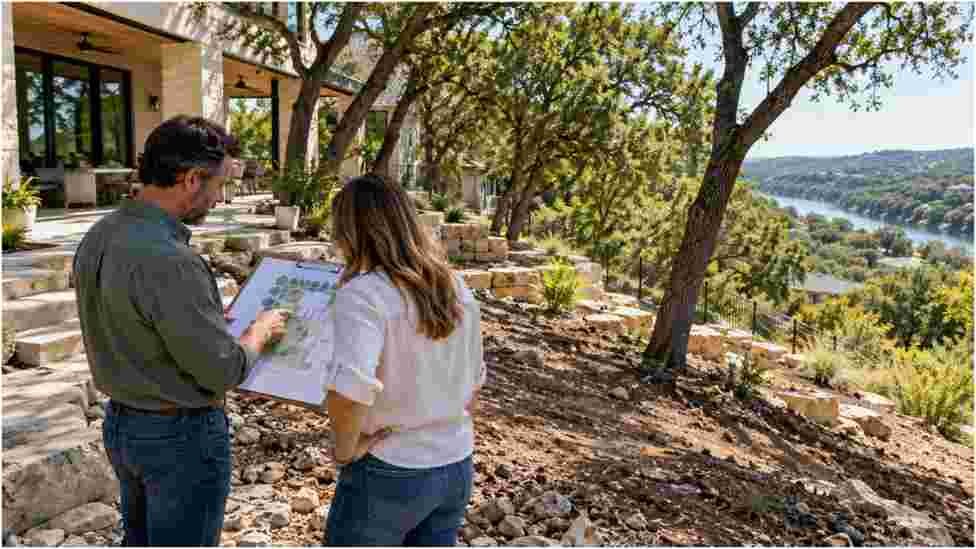
Most disappointing outdoor spaces fail for the same reason: they are planned around features instead of behavior. A patio, for example, is not automatically useful just because it exists. It needs to be placed, scaled, shaded, and connected to the house in a way that matches how people move through the home.
Before anyone chooses stone, lighting, or plant material, the core questions should be practical:
- Where will guests gather first when they arrive?
- Where does food come from, and where is it served?
- Where do people sit when they want to talk?
- What spaces need direct sun, and which need shade?
- What happens when the backyard is used by just two people instead of twelve?
These questions matter because the best entertaining spaces are also the easiest everyday spaces. Southern Landscape builds from that premise. A strong plan should handle both a casual Tuesday evening and a full-house Saturday without feeling like two different yards stitched together.
Design for Flow, Not Just Square Footage
A larger patio is not always a better patio. If circulation is awkward, the space will feel crowded no matter how much room exists. Good flow means clear paths between the kitchen, seating area, fire feature, pool, and lawn. It also means people can move without cutting through conversation zones or crossing in front of food preparation.
This is where professional landscape design projects stand apart from piecemeal upgrades. The goal is not to add elements one by one. The goal is to organize the site so each feature reinforces the next.
Build Distinct Zones That Support Different Moods
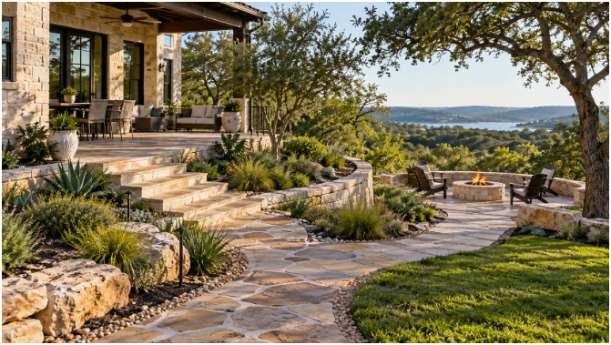
Outdoor living works best when one yard can serve multiple experiences without confusion. That does not require a massive property. It requires zoning with discipline.
A successful layout usually includes at least three layers:
- A social core for dining and gathering.
- A relaxed edge for quieter conversation or solo use.
- A utility layer that handles storage, service, and circulation without becoming visually dominant.
This structure keeps the yard from feeling like one oversized room. Instead, it becomes a sequence of spaces with different energy levels. That makes the environment more flexible and far more livable.
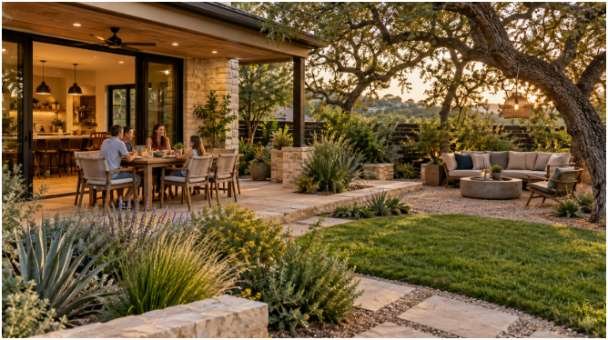
Southern Landscape often designs with this kind of layering in mind, combining hardscaping, planting, shade structures, and lighting so the yard feels cohesive from day to night. In practice, that means the same property can support a family breakfast, an afternoon by the pool, and an evening around the fire without needing to be rearranged.
Make Entertaining Comfortable Without Overbuilding
A common mistake is to treat entertaining as a special occasion that requires a special-purpose yard. In reality, a good entertaining space should be comfortable enough to use often, not just impressive enough to show off.
That is why details matter. A well-placed pergola can make a dining area usable in more seasons. Outdoor lighting can make the space safer and more welcoming after dark. A fire pit can extend the evening and create a natural gathering point. An outdoor kitchen can reduce traffic in and out of the house, which keeps conversations uninterrupted.
The point is not to add everything. The point is to add the right support for the way the household actually lives.
Use Hardscaping to Define the Experience
Hardscaping is the backbone of outdoor living because it controls structure, durability, and movement. Plants soften a landscape, but patios, walkways, retaining elements, steps, and walls determine how people use it.
A well-designed hardscape does several jobs at once. It creates a visual anchor, handles foot traffic, frames seating, and makes maintenance simpler over time. It also helps the property feel finished in a way that loose furniture or temporary solutions never can.
For example, a dining patio should usually be close to the home, while a fire feature might sit slightly apart to encourage a separate atmosphere. A poolscaping plan may need surfaces that balance safety, drainage, and visual continuity. These are not decorative decisions only. They are operational decisions.
Southern Landscape’s design-build approach is valuable here because it keeps design intent and construction execution aligned. When the same team is responsible for planning and building, the result is more likely to match the original concept instead of drifting during handoff.
Choose Materials for Weather, Wear, and Maintenance
Material selection affects more than appearance. It affects how the space performs through heat, rain, foot traffic, and long-term use. The landscape rock homeowners choose can reduce maintenance and provide long-term value. In Central Texas, that means the landscape must hold up under strong sun, variable moisture, and active outdoor living.
Smart material choices support three goals:
- They feel consistent with the home and the surrounding environment.
- They age in a way that still looks intentional.
- They are practical to clean, repair, and maintain.
This is another reason experienced firms like Southern Landscape matter. A premium design is only premium if it remains functional after the first season.
Design for Daylight, Shade, and Night Use
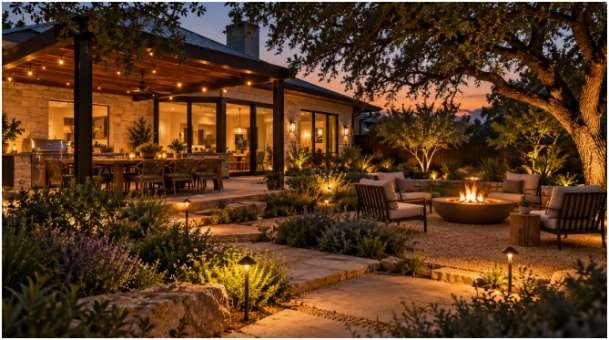
Outdoor living is not one experience. It changes dramatically with the time of day. A courtyard that feels bright and energizing at noon may be too exposed in the afternoon. A patio that works beautifully in the evening may feel empty after sunset without lighting.
That is why the most effective landscapes are designed for transitions. The yard should work across sunlight, shade, and artificial light, not just in one perfect condition.
Shade structures, tree placement, and wall orientation all influence comfort. So do lighting layers. Ambient light helps the space feel inviting, task lighting makes cooking or serving possible, and subtle path lighting improves safety and navigation. When those elements are coordinated, the landscape feels considered rather than patched together.
Daily use depends on this more than people realize. A backyard that only works in ideal weather is not truly livable. A space that remains comfortable at different hours becomes part of the home’s real routine.
Plan for Longevity So the Landscape Stays Useful
The most overlooked part of outdoor design is what happens after completion. A landscape should not only look good in photos. It should remain usable after heat, growth, foot traffic, and seasonal change.
That is why maintenance planning belongs in the design conversation from the beginning. Irrigation, plant spacing, drainage, pruning access, and durable construction details all influence whether the landscape holds together over time. Without that foresight, even a beautiful yard can become difficult to enjoy.
Southern Landscape’s long-term property care and maintenance mindset is an advantage because it keeps the project’s future in view. That matters for homeowners who want a landscape that still feels polished years later, not just the first season after installation.
Landscaping professionals know what happens when weather meets construction, so they will provide the right layout with materials suitable according to the location and weather conditions.
A strong outdoor plan should anticipate:
- how families grow and routines change
- where high-use surfaces will wear fastest
- how plants will mature and affect shade or sight lines
- whether the layout allows for easy seasonal upkeep
- how the home will feel at both small gatherings and larger events
When these details are considered early, the yard becomes easier to live with and less expensive to correct later.
The Best Outdoor Spaces Feel Effortless Because They Were Planned Carefully
The real measure of a great outdoor environment is not whether it looks dramatic on day one. It is whether people naturally use it again and again. A successful landscape invites movement, supports conversation, simplifies hosting, and makes everyday life more pleasant.
That is the standard Southern Landscape brings to projects: clear design thinking, capable construction, and outdoor spaces built to work as well as they look. If your goal is a landscape that supports both entertaining and daily living, the smartest move is to design for the rhythms of real life first. Everything else should support that.