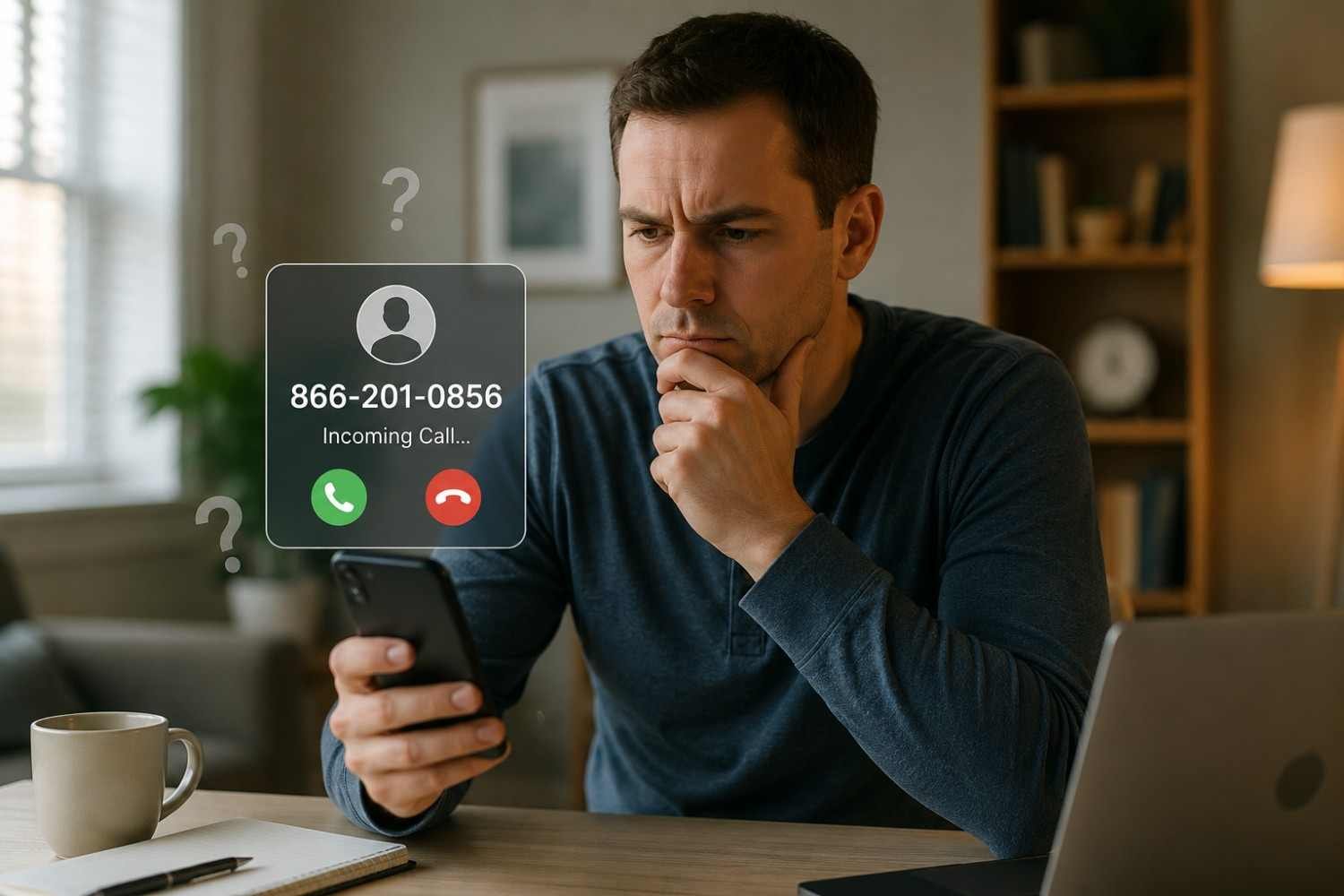
I’ve noticed how easy it is to hesitate when an unfamiliar toll-free number appears, especially when the voicemail mentions something as serious as student loans. A number such as 866-201-0856 can sound official simply because it uses a familiar toll-free format and may be connected in reports with a recognizable loan servicer. That is why I would slow down before returning the call.
The safest approach is not to decide whether a number is genuine based on caller ID alone. Reports tied to 866-201-0856 describe automated student-loan messages and requests for sensitive information, while federal agencies warn that scammers can impersonate servicers and spoof numbers. The better question is what to check before trusting the caller. A familiar name can sound reassuring, but authentication should come from your account and trusted contact channels, not from the caller’s own claims or promises alone.
What Is 866-201-0856?
866-201-0856 is a toll-free number that has generated substantial consumer reports about student-loan-related robocalls. Caller-reporting services associate it with automated messages referencing Nelnet, loan repayment, or the U.S. Department of Education.
That does not mean every call can be traced to the same organization. Phone numbers can be spoofed, allowing a caller to make a different number appear on your screen. A company name in a voicemail is not proof the call is legitimate.
The safest takeaway is simple: treat an unexpected call from 866-201-0856 as suspicious until you independently verify why someone is contacting you.
Is 866-201-0856 a Legitimate Number?
Based on reported activity, 866-201-0856 should be treated as a potentially dangerous student loan scam or robocall. Reports include people receiving repeated calls despite having no current student loans, along with messages requesting identifying information.
There is an important distinction. A scammer can spoof a real business number, while a real servicer can have legitimate reasons to contact a borrower. Independent verification is therefore more reliable than caller ID.
If you have a federal student loan, check your account through StudentAid.gov rather than following instructions from the incoming call. Your account can help you identify your actual servicer and determine whether there is a genuine issue requiring attention.
Why Might You Be Getting These Calls?
Student-loan scams work because repayment changes, forgiveness programs, and servicing issues can be confusing. An urgent automated message can pressure someone into calling back without checking the source.
Some reported calls target people who say they never had student loans or have not dealt with one for years. That mismatch is a warning sign. If a caller claims you have an unfamiliar debt, do not resolve it by supplying personal details.
A legitimate loan issue can still be checked independently. That distinction matters because ignoring a suspicious call is different from ignoring your actual loan account.
Red Flags That Should Stop the Conversation
Be especially cautious if the caller asks you to provide or confirm sensitive information, particularly your full Social Security number, account password, banking details, or other credentials. Requests for immediate payment, upfront fees, or urgent action deserve the same caution.
Another warning sign is a promise that someone can guarantee loan forgiveness or reduce your debt immediately if you act during the call. Scammers often use urgency and authority to discourage verification.
Caller ID should also stay low on your list of evidence. Even if your phone displays a familiar company name, hang up and verify it independently.
How to Verify the Call Safely
If you genuinely have student loans, start by logging into your StudentAid.gov account directly. Do not use a link sent by the caller or follow a text message to reach the site. Check your loan information and identify the servicer currently connected to your account.
If the account lists Nelnet and you want to know whether it attempted to contact you, find the company’s official contact information independently and call that number yourself. This removes the incoming caller from the verification process.
You can also save the voicemail, note the date and time, and document what information the caller requested. Those details can help if you report the interaction.
What Should You Do After a Call From 866-201-0856?
If you do not recognize the call, there is little reason to engage. Let the call go to voicemail, avoid calling the displayed number back, and block it if the calls continue.
If you believe the interaction was fraudulent, report it to the Federal Trade Commission through its official fraud-reporting system. Reporting creates a record of suspicious activity and may help identify broader patterns.
If you gave the caller your Social Security number or financial information, act promptly. IdentityTheft.gov provides steps for responding to identity theft and protecting your accounts and credit.
FAQs: Is 866-201-0856 a Legitimate Number? What to Check
1. Is 866-201-0856 a scam?
It should be treated as suspicious. Consumer reports associate the number with student-loan robocalls and requests for personal information. Do not trust the caller based only on the number displayed.
2. Does 866-201-0856 belong to Nelnet?
Reports may associate calls with Nelnet, but caller ID can be spoofed. Verify whether Nelnet is actually your servicer through your StudentAid.gov account, then use independently verified contact information.
3. Should I call 866-201-0856 back?
No. If you need to discuss a loan, contact your verified loan servicer through contact information you obtain independently. Returning an unexpected call can put you back in contact with the same caller.
4. What if I gave the caller my Social Security number?
Act quickly. Review your credit and financial accounts, consider appropriate fraud protections, and use IdentityTheft.gov for official recovery guidance. Also report the suspicious interaction to the FTC.
A Safer Way to Handle Unknown Loan Calls
A convincing voicemail can make an unfamiliar number feel more credible than it deserves. With 866-201-0856, the combination of student-loan references, automated messages, and consumer complaints is enough reason to pause rather than react. The strongest protection is simple verification: check the account you already control, identify the real servicer, and contact that organization through a trusted channel. That approach also protects borrowers who genuinely have a loan, because it separates a real account problem from a suspicious phone call.
The goal is not to fear every unexpected call. It is to make sure a caller earns your trust before receiving information that can be difficult to take back.