In early 2024, the digital preservation world shifted overnight when massive legal actions disrupted the Nintendo Switch emulation ecosystem. Millions of gamers woke up to discover that popular tools for running games on PC were scrubbed from GitHub almost instantly. Understanding nintendo switch roms is no longer just about tweaking graphics settings; it is about navigating copyright boundaries, file formats, and device security.
If you own a Nintendo Switch, you might want to back up your physical library or play games you purchased on superior hardware. However, doing so requires clear knowledge of how digital copies work, what the law allows, and how to avoid online security traps.
What Are Nintendo Switch ROMs? (NSP, XCI, and NSZ Explained)
A ROM (Read-Only Memory) file is a digital replica of a video game’s software code. In the Switch ecosystem, these files exist in specific formats depending on how they were sourced and packaged.
Each format serves a distinct purpose:
- NSP (Nintendo Submission Package): This format mirrors the standard digital download structure used on the Nintendo eShop. Digital games, downloadable content (DLC), and software updates typically exist as NSP files.
- XCI (NX Card Image): This format represents a direct, 1:1 dump of a physical retail game cartridge. It includes the original partition layout expected by the hardware.
- NSZ and XCZ: These are compressed variants of NSP and XCI files. They save significant storage space on SD cards without sacrificing game data, though they must be decompressed during installation or play.
Understanding these extensions helps you manage file storage effectively and spot suspect downloads that do not conform to standard Nintendo package rules.
The Legal and Security Reality of Game Backups
The legal conversation around video game emulation centers on original ownership versus unauthorized distribution. Under the U.S. Copyright Office regulations guidelines on digital media, unauthorized downloading of copyrighted commercial software remains illegal copyright infringement.
Key Takeaway: Owning a physical game cartridge does not give you a legal license to download a pre-packaged copy of that same game from a third-party website.
Security Risks on Public Downloading Sites
Searching for game backups on random forums or public repositories exposes your devices to severe security risks. Common threats include:
- Malicious Executables: Archives packaged with .exe files disguised as game updates or crack tools.
- Phishing Landing Pages: Sites engineered to harvest account credentials or inject adware.
- Corrupted System Dump Files: Manipulated software packages capable of bricking modded hardware.
Legitimate Acquisition: How Personal Dumping Works
The safest way to create backups of your legally purchased software is by extracting the files directly from your own console. This process—known as “dumping”—requires physical hardware modifications and custom software tools.
Here is how the dumping workflow operates:
- Console Modification: You run Custom Firmware (CFW) such as Atmosphère on an unpatched or hardware-modified Nintendo Switch.
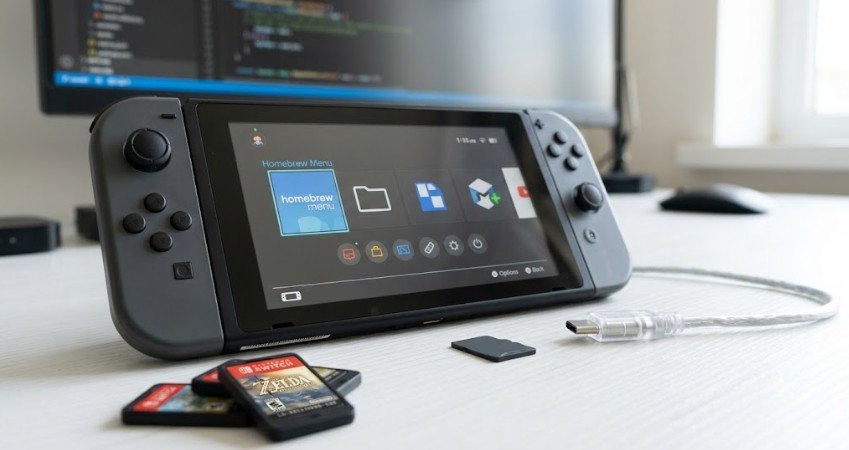
- Homebrew Environment: You launch dedicated extraction software like NX Dump Tool directly from your Homebrew menu.
- File Extraction: The tool reads your inserted physical cartridge or digital purchase and generates a clean NSP or XCI file onto your internal microSD card.
By keeping the entire pipeline local to your hardware and purchases, you avoid unauthorized third-party downloads while retaining total control over your library.
The Changing Emulation Landscape
Running your game backups on alternative platforms has become much harder due to sweeping legal enforcement against software developers.
| Project / Emulator | Status | Primary Function |
| Yuzu & Suyu | Defunct / Scrubbed | PC Emulation of Switch Hardware |
| Ryujinx | Discontinued | High-Precision PC Emulation |
| RetroArch | Active | Legacy System Emulation (SNES, N64) |
Major PC projects like Yuzu and Ryujinx faced DMCA takedowns and legal settlements that effectively shut down primary development hubs. While legacy platforms like RetroArch continue to thrive, they serve to emulate classic retro hardware on the Switch rather than emulating modern Switch titles on external PCs.
Organizations like the Electronic Frontier Foundation highlight that while reverse-engineering hardware for interoperability is protected in specific contexts, tools that bypass digital rights management (DRM) face steep legal hurdles.
Checklist: Preparing Your Hardware for Safe Backups
Before attempting to create digital backups of your own game library, evaluate your hardware readiness with this checklist:
- Hardware Check: Verify if your Switch console model is vulnerable to softmodding (typically early unpatched V1 models) or requires modchip installation.
- MicroSD Card Capacity: Ensure you have a high-end microSD card (formatted to FAT32) with at least 64GB to 128GB of free space for dumping large software files.
- NAND Backup: Complete a full backup of your system’s internal storage (NAND) before running any custom firmware tools.
- Offline Operation: Disconnect your console from official Nintendo servers while running custom firmware to lower the risk of console bans.
Misconceptions About Switch ROM Files
- “Downloading a ROM is legal if I own the physical game.”
False. Copyright law protects distribution rights. You are generally allowed to dump your own physical media for personal backup, but downloading a copy made by someone else remains infringement. - “Emulators themselves are illegal.”
False. Developing or running an emulator is legally permissible if it does not infringe on copyrighted code or break encryption keys proprietary to the original manufacturer. - “Compressing an XCI file degrades in-game graphics.”
False. Formats like NSZ and XCZ use lossless compression algorithm pipelines. Decompression yields identical software data without compromising visual assets.
Frequently Asked Questions
1.What is the difference between an NSP and an XCI file?
An NSP file mimics digital eShop downloads, updates, and DLC packages. An XCI file is a direct dump from a physical retail cartridge.
2. Is downloading Nintendo Switch ROMs legal in the US?
No. Downloading commercial game files from third-party sites is unauthorized copyright infringement, even if you own a physical copy of the title.
3. Can I run Switch ROMs on an unmodded console?
No. Standard Nintendo hardware enforces security checks that block unverified software packages unless custom firmware or hardware modifications are active.
4. Do compressed NSZ files reduce game performance?
No. Compression saves storage space on your drive. Files decompress during installation or loading without altering gameplay or graphics performance.
Exploring software preservation offers a fascinating window into console architecture and computing limits. However, long-term enjoyment of digital media relies on safe habits and respecting creator rights. By using legitimate hardware extraction methods, keeping your console isolated from malicious file sources, and supporting developers directly, you protect your system while building a resilient personal library.