I first noticed the phrase “Apple Teleport” while looking through the kind of futuristic technology claims that spread quickly online. The name sounded plausible enough to make me pause, especially because Apple has a long history of turning ideas that once seemed distant into everyday products. What caught my attention, though, was how little clear information existed behind the dramatic claims.
I also found that the confusion becomes easier to understand once you separate real Apple technology from internet speculation. Apple does have hardware that can make digital experiences feel remarkably physical and immersive, but that is very different from moving a person from one location to another. That distinction is where the Apple Teleport story gets interesting.
What Is Apple Teleport Supposed to Be?
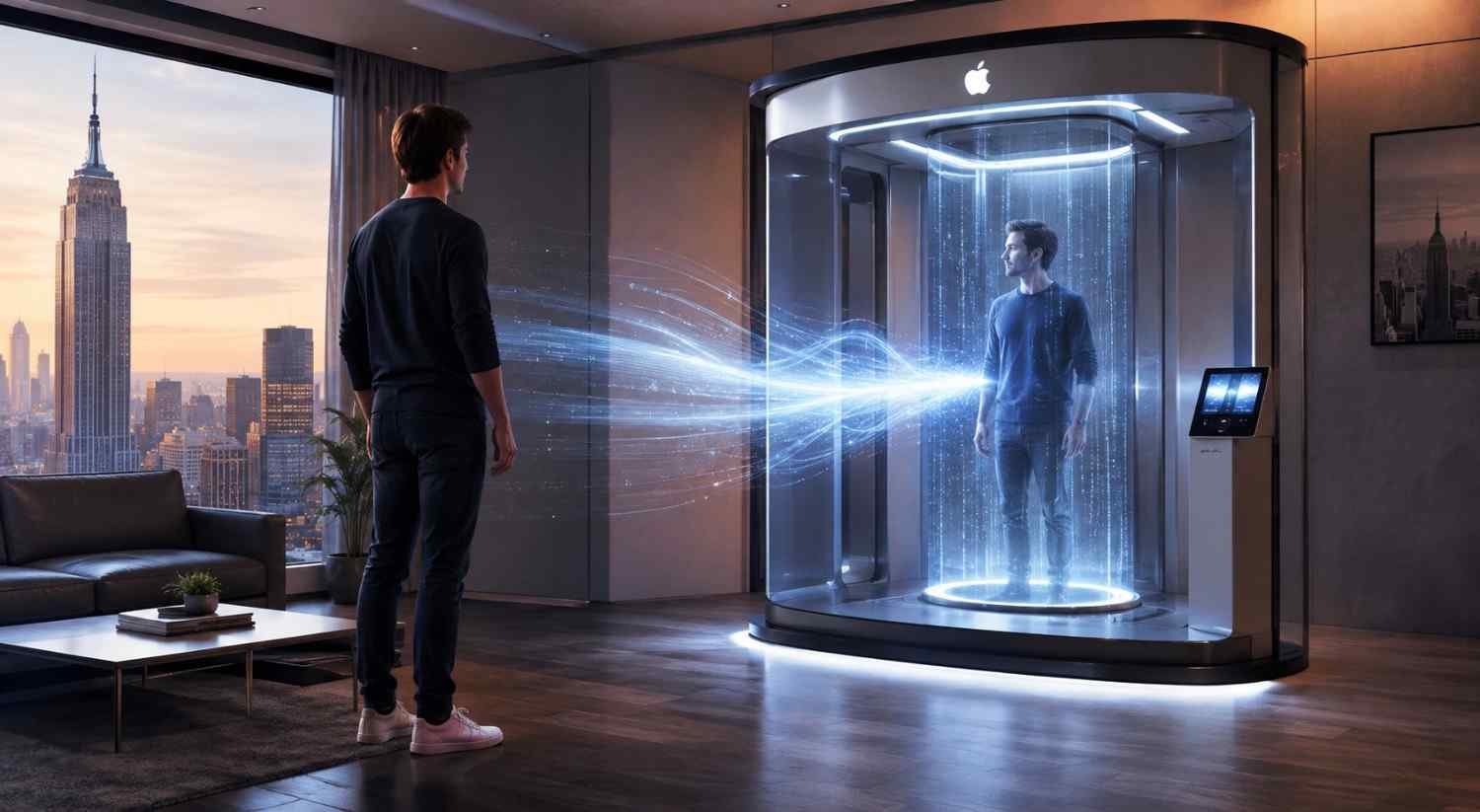
Apple Teleport is generally presented online as a futuristic teleportation device supposedly connected to Apple. Depending on the claim, the imagined machine can instantly move people, objects, or even users into another physical location. Some versions include sleek hardware, futuristic rooms, launch dates, prices, and polished demonstrations that make the concept look like an unreleased Apple product.
There is a basic problem with those claims: Apple has not announced a teleportation device, verified Apple Teleport product, or official release date.
Images and videos associated with the idea may be concept art, AI-generated material, entertainment, or speculative design. The mistake happens when such material is presented as evidence of a real Apple product.
Why the Apple Teleport Rumor Feels Convincing
A futuristic Apple concept has an unusual advantage: the brand itself makes ambitious ideas feel believable. A glossy video showing a minimalist teleportation chamber can look convincing before anyone checks its source.
AI-generated visuals make that problem harder. Modern image and video tools can create realistic product shots, interfaces, advertisements, and demonstrations without requiring an actual prototype. A short clip can therefore appear to show a finished device when it may only represent someone’s imagined future.
Search snippets and social posts add another layer of confusion. A speculative claim may be repeated until repetition starts to resemble confirmation. Unrelated apps using “Teleport” can also muddy the picture when viewers assume every result refers to the same technology.
The safest approach is simple: look for an official Apple announcement, product page, or developer documentation before treating a dramatic claim as real.
What Apple Actually Has
The closest real Apple technology to the popular teleportation idea is spatial computing. Apple Vision Pro blends digital content with the physical environment through cameras, sensors, displays, spatial audio, eye tracking, and hand interaction. Apple describes it as a spatial computer, not a teleportation machine.
That distinction matters because the experience can still feel close to the fantasy behind teleportation. Vision Pro can surround users with immersive environments, display three-dimensional content, and let them revisit spatial photos and videos with depth. VisionOS also supports spatial scenes that add lifelike depth to compatible photos.
None of this transports the user’s body. Instead, it changes what the user sees, hears, and interacts with while remaining in the same physical location.
That is a more realistic interpretation of the futuristic promise. Technology can increasingly create the sensation of being somewhere else without actually moving you there.
What Quantum Teleportation Really Means
Quantum teleportation is real science, but the phrase is often misunderstood. It does not beam people, furniture, phones, or other physical objects across space. Instead, it transfers quantum information between locations using entanglement and classical communication.
A simplified way to picture it is that the important thing transferred is the state of a quantum system rather than the physical particle itself. The destination system can acquire that state through the teleportation protocol.
This is extraordinary science, but it is fundamentally different from science-fiction teleportation. It does not provide a shortcut for transporting humans or establish a practical route toward an Apple teleportation machine.
The distinction is worth keeping clear because quantum terminology can make speculative product claims sound far more technologically advanced than they actually are.
Could Apple Ever Create Something That Feels Like Teleportation?
A physical teleportation device remains far beyond demonstrated consumer technology. There is no established engineering method for scanning and reconstructing a human at another location.
A digital version is much more plausible. Better spatial capture, real-time rendering, artificial intelligence, immersive displays, volumetric video, and low-latency communication could make remote experiences feel increasingly immediate. Instead of physically arriving somewhere, a person could experience a highly convincing representation of another place or interact with a detailed representation of someone who is far away.
Apple’s spatial-computing platform already points toward pieces of that future. Developers can build immersive experiences that blend digital content with the physical world, while spatial photos and scenes make recorded moments feel more dimensional.
That future would still be telepresence, simulation, or immersive communication rather than literal teleportation. The distinction may sound technical, but it prevents exciting possibilities from being confused with capabilities that science has not demonstrated.
FAQs: Apple Teleport: From Futuristic Concept to Real-World Possibility
1. Is Apple Teleport a real product?
No. Apple has not announced an Apple Teleport device or confirmed a consumer teleportation product. Online claims should be treated as speculation unless supported by official Apple information.
2. Can Apple Vision Pro teleport people?
No. Vision Pro creates immersive spatial experiences, but the wearer remains physically where they are. It can create a strong sense of presence without transporting the person.
3. Does quantum teleportation move matter?
No. Quantum teleportation transfers quantum information using entanglement and classical communication. It does not transport physical matter from one location to another.
4. Could teleportation become possible someday?
Literal human teleportation has not been demonstrated and faces enormous scientific challenges. Telepresence and immersive remote experiences, however, are realistic areas of continued technological development.
Why the Idea Still Matters
The Apple Teleport rumor is worth examining because it shows how quickly the boundary between technology and imagined technology can blur. A fictional product can borrow real scientific language, familiar branding, and convincing AI visuals, then become difficult to distinguish from an authentic announcement. Looking past the spectacle reveals a more interesting reality: Apple is already developing spatial technology that changes how people experience digital places, memories, and communication.
The machine itself may be fiction, but the desire behind it is real. People want technology to make distance feel smaller, and that goal is already shaping the next generation of immersive computing.